

The High Price of Vaccine Skepticism
How RFK’s War is Going to Raise Your Cost-of-Living

Over the course of the last year, HHS Secretary RFK Jr. has implemented a wide range of policies that have amounted to a war on vaccine makers. He has canceled 500 million dollars in contracts for mRNA vaccines and a 600 million dollar contract forModerna to invent a vaccine for bird flu. He gutted the Center for Disease Controls vaccine panel and staffed it with appointees who share his skepticism of vaccines. Dr. Sean O’Leary, chair of the Committee on Infectious Diseases for the American Academy of Pediatrics explains, that’s like “if you took all the air traffic controllers in the U.S. and just fired them…and replaced them with people that not only didn’t really know how to be air traffic controllers, but several of them didn’t even believe in flying.” RFK Jr. downwardly revised the number of diseases that the government recommends children get vaccinated for; this is important because federal recommendations guide states’ vaccine mandates.
In response to this hostile regulatory environment, major vaccine manufacturers have been pulling back from research and development as well as broader investment. This is significantly curbing vaccine development and trials for vaccines. To give one example, Moderna has been forced to halt its work on a vaccine for the Epstein-Barr virus, which is the most common cause of mononucleosis (“mono”) and is linked with a number of cancers and autoimmune diseases.
On top of the negative public health ramifications, this is going to drive up costs for Americans in three important ways. First, it directly increases medical care costs. Second, it shrinks the array of public goods that the vaccine pipeline produces. Third, it will cause insurance premiums to rise. All of this is a choice. The Trump administration, via RFK Jr., is actively choosing to have fewer vaccines rather than more.
Direct Medical Costs
When vaccination rates fall and new vaccines don’t get developed, more people get sick, and sick people cost the medical system more money. A 2024 CDC study found that childhood vaccinations among kids born between 1994 and 2023 prevented 508 million cases of illness, 32 million hospitalizations, and over 1.1 million deaths. Please stop and read that again. 1.1 million children did not die because of vaccines. Before vaccines, horrible diseases like measles were incredibly common.
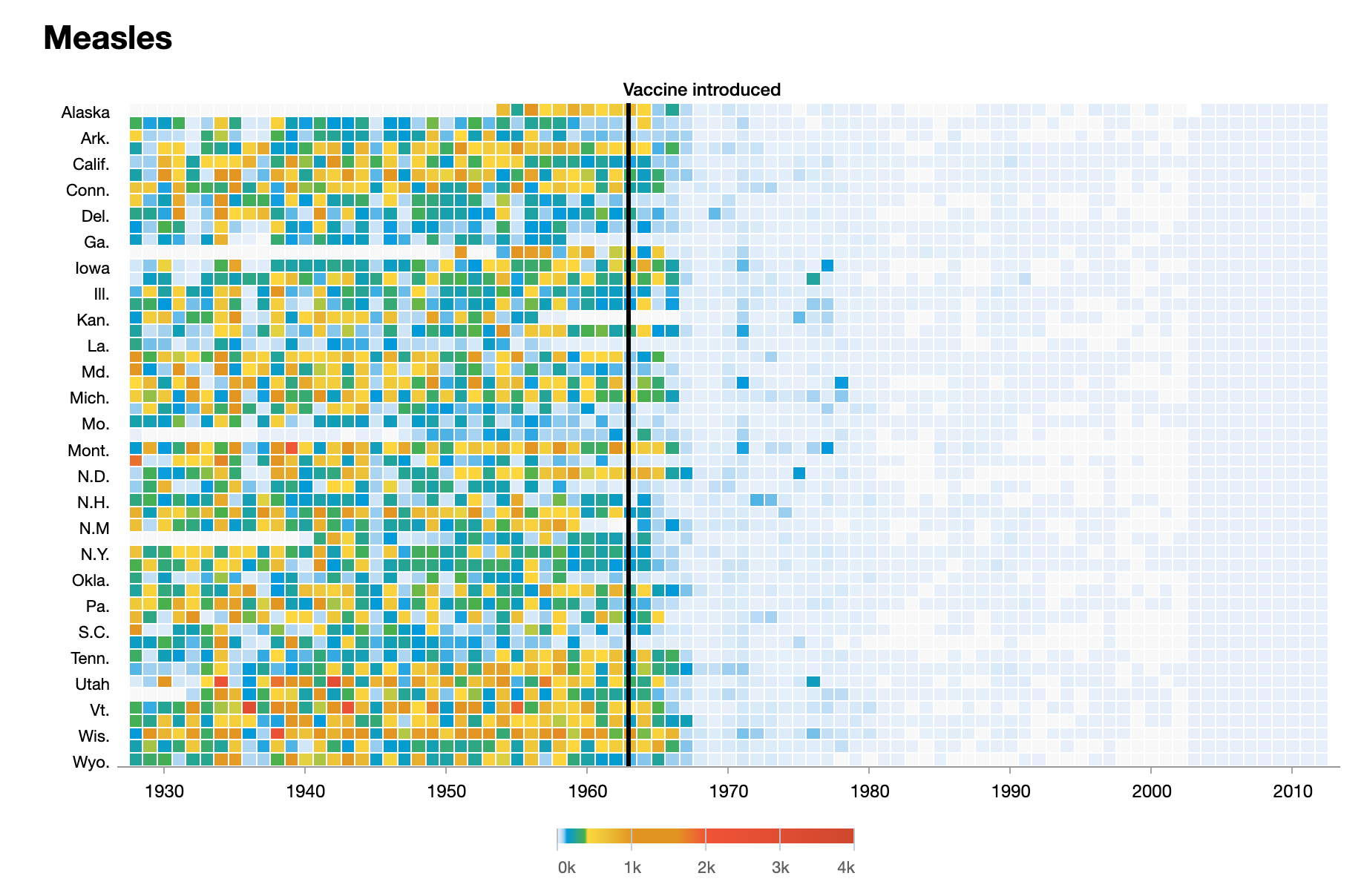
This piece is about the cost-of-living (and that’s important), and this newsletter is about the cost-of-living, but there are things that matter besides costs and one of them is preventing children from dying needlessly. That’s what vaccines do.
The human stakes are clear, but so are the economic stakes: vaccines bring down costs. That same CDC study found that those childhood vaccinations generated a net savings of $540 billion in direct costs and $2.7 trillion in societal costs. Every $1 spent on childhood vaccinations saves approximately $11 in direct medical costs, and that number rises to around $20 when you factor in lost wages and productivity. It’s not just a children’s issue though. Another study found that 10 vaccine-preventable diseases cost the U.S. approximately $9 billion in 2015 alone with unvaccinated adults accounting for about $7.1 billion of that.
The Vaccine Pipeline is a Public Good
The costs discussed above are the visible ones: the hospital bills, the lost wages, the outbreak response budgets, etc. But RFK Jr.’s war on vaccine makers will also impose the costs of a diminished vaccine pipeline, and they are harder to see precisely because they represent things that won’t exist, i.e. research that won’t get done, innovations that won’t happen, and diseases that won’t get cured. It’s a case of invisible graveyards leading to more actual graveyards.
Vaccines are a public good. Like clean air or national defense, their benefits extend far beyond the people who directly receive them. Herd immunity protects people who can’t be vaccinated like small children, the elderly, and people with immune diseases. The research infrastructure built around vaccine development generates spillover benefits that reach well beyond vaccines themselves. This happens quite frequently. The mRNA platform developed for COVID-19 vaccines, for instance, is now accelerating cancer immunotherapy research in ways that could transform oncology over the next decade. Research on the polio vaccine advanced our understanding of neuroscience. HPV vaccine research deepened our understanding of how viruses cause cancer more broadly. My point being that we never fully know in advance what a vaccine research program will unlock, which makes the losses from abandoning them especially hard to calculate.
The U.S. vaccine manufacturing base was already fragile before RFK. There are only a handful of manufacturers for most vaccines, and several have already exited the market over the past two decades because margins were thin. The current political environment is pushing an already-stressed industry closer to a tipping point.
What makes RFK’s sabotage of the vaccine pipeline particularly costly is its irreversibility. Manufacturing capacity, laboratory expertise, and research programs that took decades to build can’t simply be switched back on once manufacturers exit the market. When Moderna halted its work on that Epstein-Barr virus vaccine, that’s less a temporary pause and more an innovation path that now may never get built. Epstein-Barr is linked to multiple sclerosis, several lymphomas, and possibly some cases of lupus. The vaccine Moderna was developing wasn’t just addressing mono; it was potentially a breakthrough against a cluster of serious chronic diseases. And now we’re not going to get that.
Insurance Premiums
Those first two costs fall most heavily on people who get sick or who would have benefited from vaccines that never get developed. But the third cost lands on everyone —higher insurance premiums. Insurance pricing is based on population-level health outcomes; if more people are going to get heart disease, the insurance companies understand that they are going to have to pay out more for that extra care and so to make up for that, they charge higher premiums. Similarly, when vaccination rates fall and preventable diseases circulate more widely, insurers pay out more claims and so raise premiums.
The scale of the issue here is eye-popping. The U.S. already spends about $27 billion annually treating diseases that could have been prevented through vaccination (and note that this number is only for adults 50 and over). That cost doesn’t magically disappear; it gets distributed across the insurance pool and ultimately passed back to policyholders.
All of this hits employers as they pay for most of a worker’s health insurance premiums.
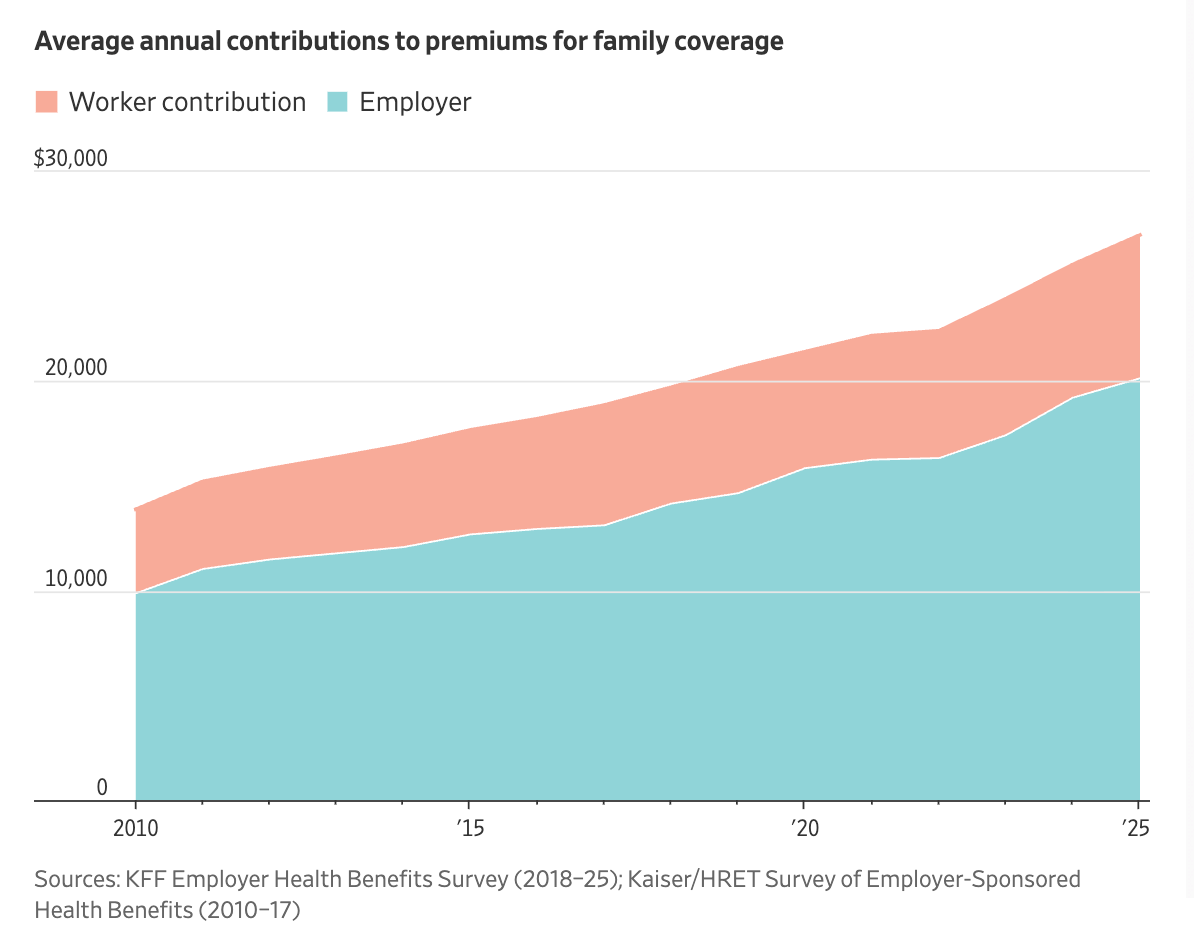
Once you’re charging those employers more, they have to either cut some other benefit, pay workers less than they otherwise would, raise prices, or hire fewer people. So the premium increase doesn’t just show up in what workers pay directly, it hits compensation and employment quite broadly. RFK’s policies aren’t just raising costs in one way but rather are ricocheting around healthcare economics and hitting an array of different groups through higher hospital bills, smaller research budgets, smaller paychecks, and less employment all at once.
RFK Jr. is Doing Healthcare Scarcity
There is a through-line connecting all three of these costs: our government is making a choice to have fewer vaccines rather than more. Not because science or economics demanded it. But because RFK Jr. brought his personal obsessions to one of the most powerful health policy positions in the world, and the Trump administration enabled him. And this is in addition to the Trump administration’s other counterproductive healthcare policies like cutting Medicaid.
The abundance agenda is simple at its core: when we remove barriers to producing more of something people need, costs come down and lives improve. The opposite is also true. When policy artificially restricts supply (of housing, of healthcare, of vaccines) costs go up, and in this case, they get distributed across everyone, showing up in hospital bills, insurance premiums, and research breakthroughs that never happen.
That’s what RFK Jr. is doing. He is engineering scarcity in one of the highest-value public goods the American healthcare system produces. And American families are going to pay for it, in ways both visible and invisible, for years to come.
-GW