


This week brought a mixed bag for American families struggling with rising costs. On the positive side, federal and state leaders rolled out ambitious plans to tackle housing affordability — from Senator Gallego's comprehensive Path Home proposal to New York Governor Hochul's push to cut red tape, lower insurance premiums, and make childcare more affordable. As families head into 2026, the gap between pro-affordability policy and real-world relief remains wide, and closing it will require sustained action on the issues hitting household budgets hardest.
New Pro–CoL Developments:
Gallego Unveils the “Path Home” Housing Affordability Plan
What happened: Senator Ruben Gallego (D-AZ) released “The Path Home: Rebuilding the American Dream and Restoring Housing Affordability,” a comprehensive federal plan to expand housing supply and reduce costs. It includes proposals for boosting home construction, reforming zoning and permitting, offering first-time homebuyer tax credits, down-payment assistance, strengthening tenant protections, and climate-resilient housing strategies.
Why it matters: Housing remains one of the largest drivers of household expenses nationwide, and federal leadership on supply, regulation, and upfront affordability tools could lower rent and homeownership barriers over time. By aiming to produce millions of new and preserved homes and reducing regulatory costs, Gallego’s plan addresses supply constraints that push up prices — a structural contribution to lowering long-term cost of living. You can read Gary’s breakdown here.

Image Credit: Senator Ruben Gallego
New York Moves to Speed Up Housing Construction
What happened: NY Governor Kathy Hochul proposed a plan to streamline or exempt certain housing projects from lengthy environmental reviews under the State Environmental Quality Review Act (SEQRA), aimed at speeding up construction and lowering costs.
Why it matters: By reducing regulatory delays and costs for housing construction, this initiative can boost housing supply more quickly, which is key to stabilizing rents and home prices in a state with high living costs. Faster permitting can make projects less expensive for developers — savings that can translate to lower rents or sale prices.
That’s not all Hochul has pledged to do….
In her recent State of the State address, Governor Kathy Hochul has placed affordability at the center of her pledge to New Yorkers.
Childcare:
What happened: Hochul’s plan expands funding for early childhood education and care, including universal pre-K seats for 4-year-olds by 2028 and a pilot program for child care for 2-year-olds, backed by significant state investment (billions in new subsidies).
Why it matters: Child care is one of the most rapidly rising household expenses, especially for working families. Expanded access and subsidies help parents stay employed and reduce out-of-pocket costs, directly improving affordability for struggling households.
Auto Insurance:
What happened: Hochul pledged aggressive reforms to reduce some of the nation’s highest auto insurance rates by scrutinizing fraud, adjusting liability standards, increasing transparency, and exploring discounts for safe driving.
Why it matters: In New York, auto insurance premiums are a major living cost — sometimes thousands above the national average — and reforms could save families significant money annually. Reducing insurance premiums relieves pressure on household budgets and can lower associated costs like car ownership and transportation.
Energy:
What happened: Hochul announced a push to expand nuclear power by facilitating 4–5 GW of new capacity to improve grid reliability and help lower energy costs. The plan includes a “Nuclear Reliability Backbone” to streamline advanced nuclear development and workforce programs like NextGen Nuclear New York.
Why it matters: Expanding reliable nuclear power could stabilize long-term energy supply and reduce future rate spikes, easing cost-of-living pressures tied to electricity and heating.
Judge Clears Way for Offshore Wind Project to Resume
What happened: A federal judge on Jan. 12 issued an injunction allowing construction to resume on the nearly completed Revolution Wind offshore farm, overturning the Trump administration’s order pausing the project. The 704 MW wind development off Rhode Island and Connecticut – meant to power over 300,000 homes – had been halted in December over disputed national security claims.
Why it matters: The court’s ruling lets a major clean energy source get back on track, which officials say will lower electricity costs for consumers. Connecticut’s governor noted federal interference was blocking “lower energy costs and good-paying jobs,” and the win means ratepayers avoid an estimated $500 million per year in higher costs had the project been stopped. In the long run, expanding wind power should increase energy supply and help stabilize utility bills.
New Anti–CoL Developments:
Health Subsidies Expire, Driving Up Premiums
What happened: Temporary enhanced subsidies for Affordable Care Act insurance plans expired at the end of 2025 after Congress failed to renew them. As a result, millions of Americans are seeing steep increases in their 2026 health insurance premiums. Insurers and analysts report that without the extra federal tax credits, average marketplace plan costs will more than double for subsidized enrollees this year, hitting middle-class families especially hard.
Why it matters: The lapse of these subsidies – which had made Obamacare plans more affordable since 2021 – is a major blow to household finances. Many low- and moderate-income individuals who previously qualified for discounted premiums are now facing monthly payments hundreds of dollars higher, squeezing budgets. Health experts warn that some Americans may drop coverage due to the cost spikes, risking more people going uninsured. In short, losing this aid has effectively raised the cost of living for those who need health insurance, adding pressure to families already dealing with inflation.
Federal Fraud Probe Freezes Family Aid Funds
What happened: On Jan. 6, the U.S. Department of Health and Human Services froze access to certain welfare and child care funds in five states — California, Colorado, Illinois, Minnesota, and New York — citing suspected fraud. Payments from programs including TANF and the Child Care and Development Fund were halted pending review, putting more than $10.6 billion in aid temporarily on hold.
Why it matters: The freeze disrupts essential support for low-income families who rely on cash assistance and child care subsidies to afford basics like rent, food, and daycare. Even a temporary pause may delay payments, limit enrollment, or strain childcare providers, forcing families to cover higher out-of-pocket costs. While fraud oversight is important, the immediate impact is increased financial uncertainty for vulnerable households already facing high living costs.
Food and Rent Inflation Strains Household Budgets
What happened: Inflation rose 0.3% in December, holding at 2.7% year-over-year. Food prices surged 0.7% – the biggest monthly jump in 3+ years – with steak up 17.8% from last year and steep increases in produce, dairy, and other staples. Rents climbed 0.4%, continuing their upward march. Energy was mixed: gasoline fell 0.5%, but natural gas spiked 4.4% and electricity remains nearly 7% higher year-over-year.
Why it matters: Basic living expenses are rising faster than paychecks. Even though overall inflation has cooled from pandemic highs, persistent spikes in food and housing costs squeeze family budgets where they feel it most – every grocery trip and rent check. These increases drive consumer confidence down and create political headwinds for President Trump heading into an election year. The cost-of-living burden remains heavy despite steady overall inflation.
Win of the Week!
Sen. Elissa Slotkin calling out the housing crisis!
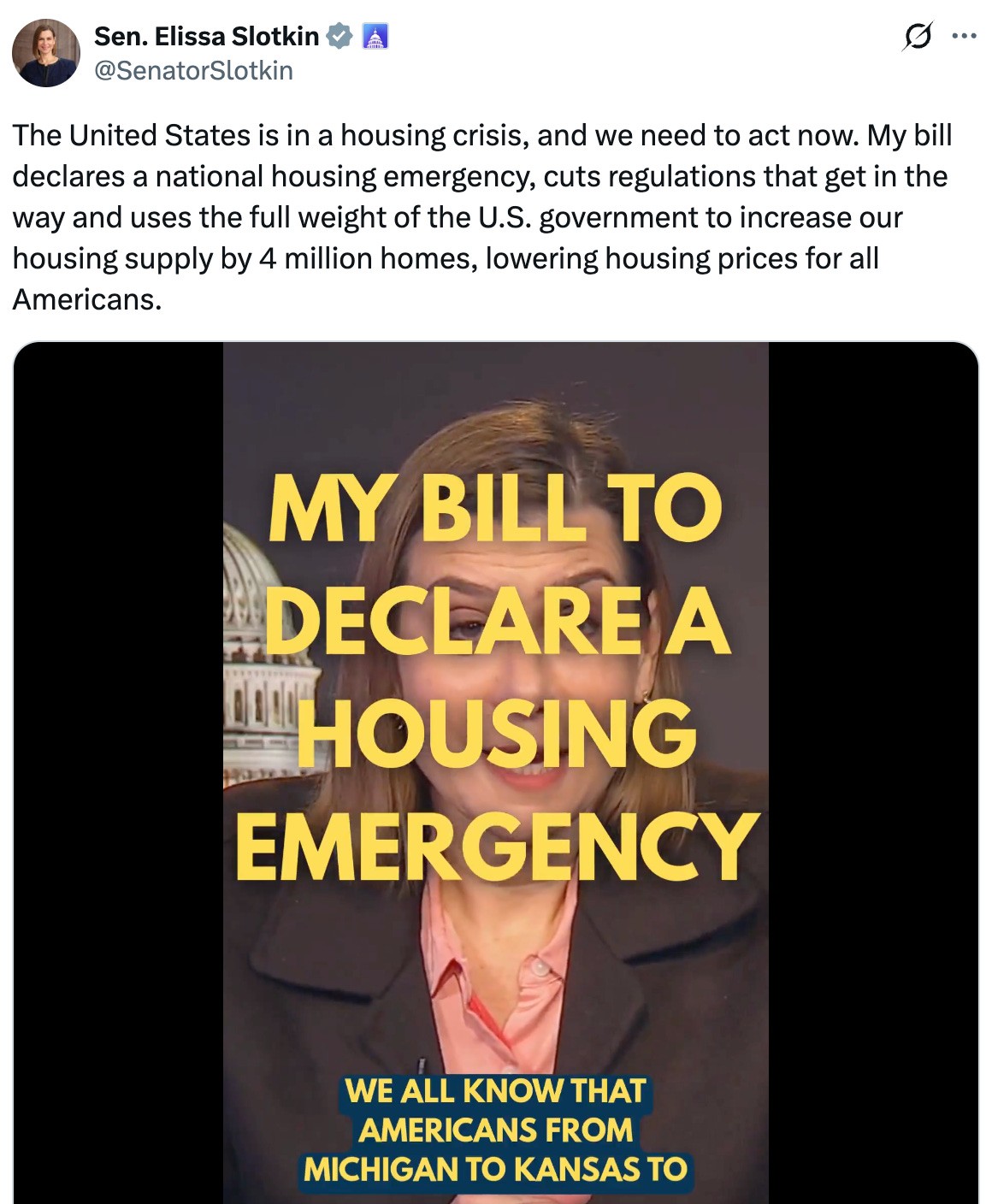
Sen. Elissa Slotkin introduced a bill declaring a national housing emergency and using federal authority to cut through state and local barriers that block housing construction. The proposal would preempt regulations that impose a “substantial burden” on building or rehabilitating housing, with the goal of increasing supply by 4 million homes and lowering housing costs.
That’s all for now! It may be too late to wish you all a Happy New Year, but we hope it’s been off to a great start.
Your Affordability Reports are very useful. Look forward to reading them. I agree with 100% of the goals laid out in Gallego's new plan. I don't agree with one aspect. The $15,000 tax credit for 1st time home buyers. This type of tax credit (not offset by increased taxes elsewhere) increases the national debt. There are also unintended consequences of lowering down payment requirements down to 0%. Starting off with no equity puts homeowners in a vulnerable position. Incentivizing withdrawals from retirement accounts comes with issues as well. I firmly believe there is a better way to providing access to homeownership by restructuring the timing of earned social security benefits to better align with the family formation years.