

Our Turn to Build
How AHC is Revolutionizing Housing Construction

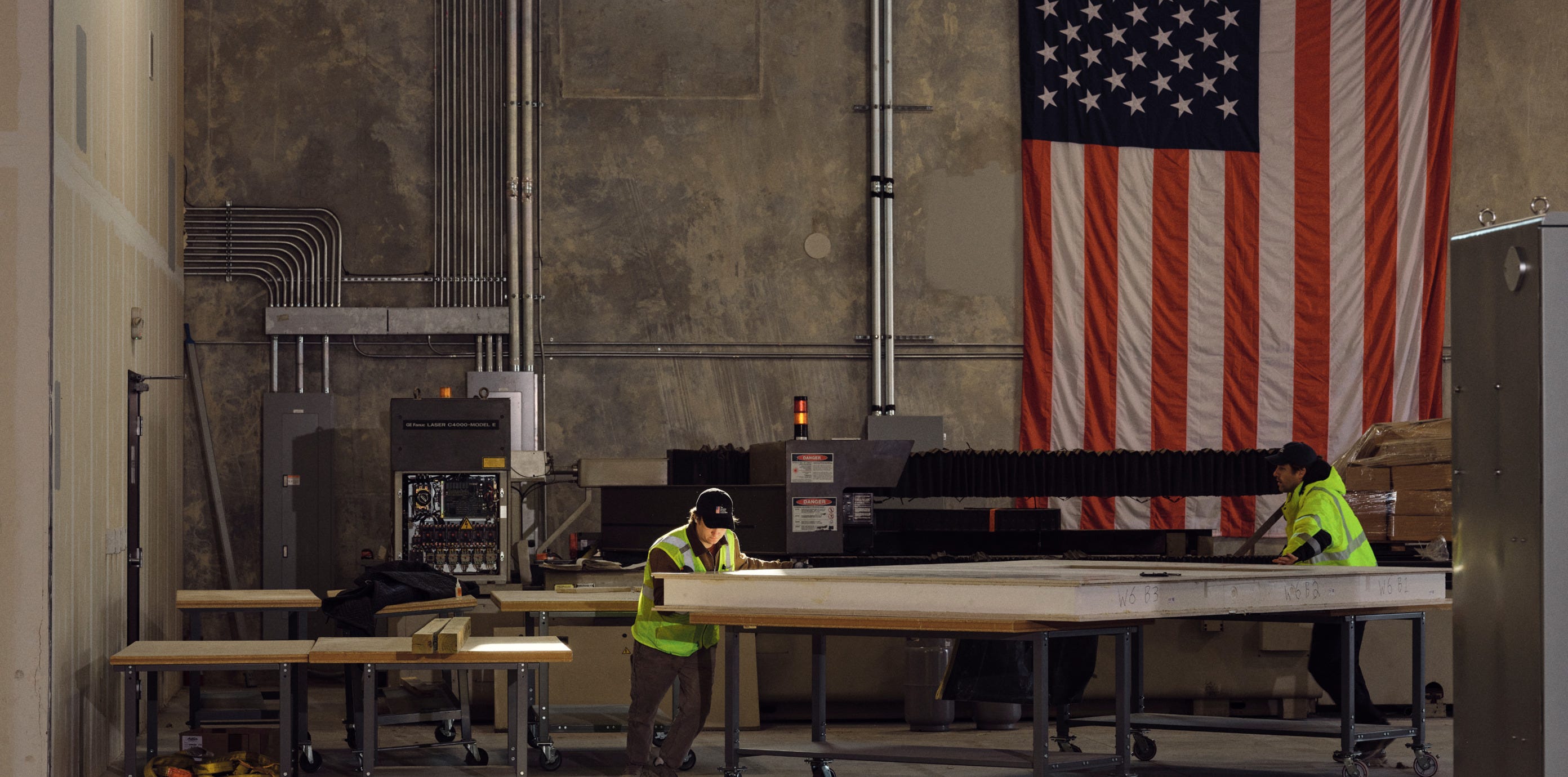
Corporate mission statements are usually terrible vapid word salads that are about as inspiring as a lanyard and about as cool as a fanny pack. But then you read the mission statement of the new company the American Housing Corporation and it’s...different. It begins, “Americans won independence, expanded freedom, beat a depression at home and spread democracy abroad. We united the continent with highways, raised skyscrapers, and put men on the moon. Over 250 years, a simple truth took form: the American Dream is built, not inherited. Now it’s our turn to build something worthy of the name ‘American’...” and goes on from there. Read the whole thing. It’ll have you ready to stand up and cheer.
AHC is doing something potentially enormous. They’re vertically integrating real estate, advanced manufacturing, modular design, and software to deliver affordable, beautiful homes in places with good jobs and economic opportunities but too-high housing costs. This could revolutionize American housing.
Why Building Housing Hasn’t Been More Like Building Toys
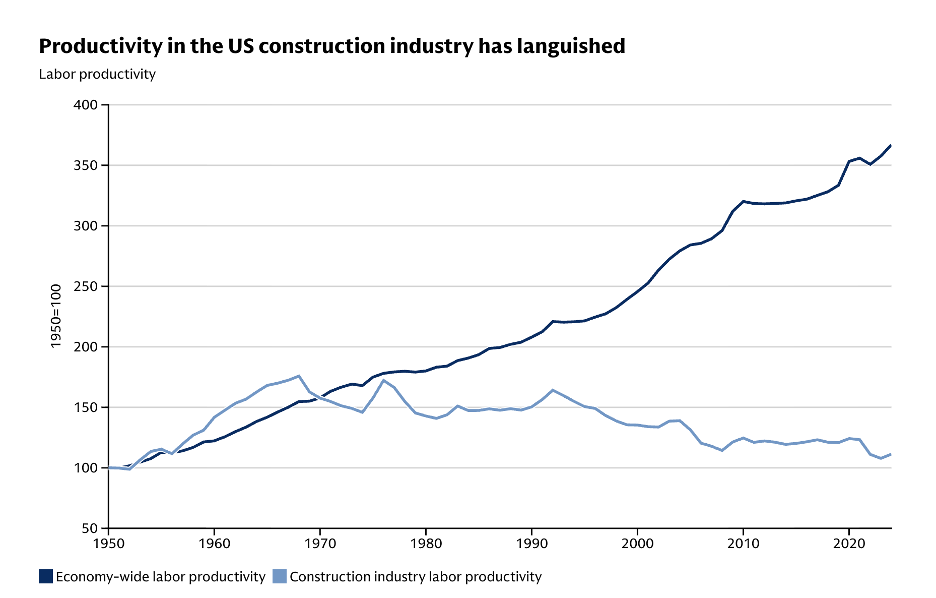
Over the last few decades some industries have gotten dramatically more productive. Back in December, I highlighted how the toy industry has gotten more efficient leading to more affordable Christmas gifts. That is not some idiosyncrasy of toys; many industries have seen significant productivity increases over the last half-century. But you know what industry hasn’t? Housing construction. While productivity for the rest of the economy has more than doubled since 1976, productivity in the construction industry has actually fallen.
There are three main reasons for this. First, every house is different. Between irregular lots, local building codes that vary from one municipality and one state to the next, traditional homebuilding has had to treat each project as essentially custom work. That makes the kind of standardization that drove the efficiency gains in the toy industry almost impossible. You can’t build an assembly line for something where every unit is a one-off.
Second, homebuilding comes with a lot of coordination problems. A typical home build involves a variety of independent subcontractors (framers, electricians, plumbers, drywall crews, roofers) each scheduling around the others. When one trade runs late, every other trade waits. There’s no systems integrator, no single entity responsible for the whole process. Efficiency bleeds out like heat from drafty windows.
Third, the regulatory environment actively punishes speed. Local permitting, variance reviews, inspections at every phase, to say nothing of lawsuit-wielding NIMBYs, adds delays and significant costs to every project. Even if a developer wants to build faster, they still get stuck waiting. A recent study found that, in Los Angeles, developers are willing to pay 50% more for land that is pre-approved and so doesn’t have to go through the normal, slow permitting process. Researchers have found that each percentage point increase in county-level land use regulation reduces construction productivity growth by between 0.6 and 0.9 percent. The result is a construction industry that looks, in many ways, more like a medieval guild system than a modern factory.
Fourth, on top of all this, for most of the last few decades, zoning laws have made missing-middle housing (rowhouses, duplexes, etc.) effectively illegal in large swaths of the country. But, thanks to YIMBY housing reforms like California’s SB 79, Austin’s bevy of land-use reforms, and pro-housing policy changes in many other places as well, that is often no longer true, which means that, if you can figure how to bring those manufacturing-style efficiencies to housing production, particularly missing-middle housing, you now have the legal opportunity to profitably build that out where you once didn’t. And this is where the American Housing Corporation comes in.
Who AHC Is and What They Do
The American Housing Corporation was founded by Bobby Fijan, a real estate developer who’s been a longtime champion for more family friendly housing, William Davis (better known on Twitter as @YIMBYLAND), Harris Rothaermel, and Riley Meik, who in their own words, found each other “screaming into the void“ online. They wanted to solve a problem that sounds simple but has stumped developers for decades: why can’t someone just build good, affordable rowhouses in the cities where families want to live? Turns out no one had built the right production system. So that’s what they set out to do.
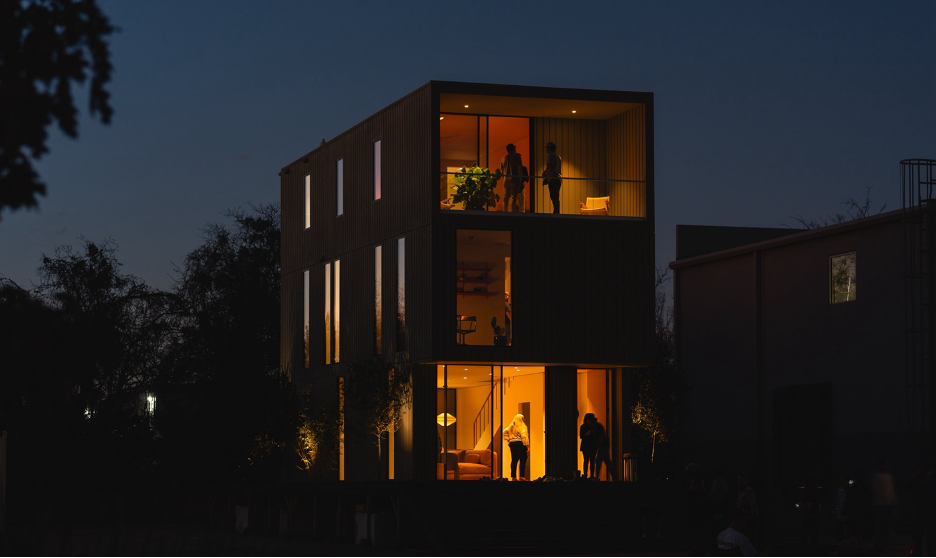
AHC’s solution is a kit-of-parts system designed specifically for rowhouses. The components, materials like fiberglass-reinforced cement panels that have traditionally been more common in aerospace and automotives than housing, are manufactured off-site. They’re also engineered for low-cost shipping in standard shipping containers (this is more important than people often realize), and designed to snap together on-site in days rather than months. Think of it less like traditional construction and more like a very sophisticated, very large piece of flat-pack furniture from Wayfair or IKEA, except the end product isn’t a desk but rather an entire beautiful home that fits naturally into an urban neighborhood.
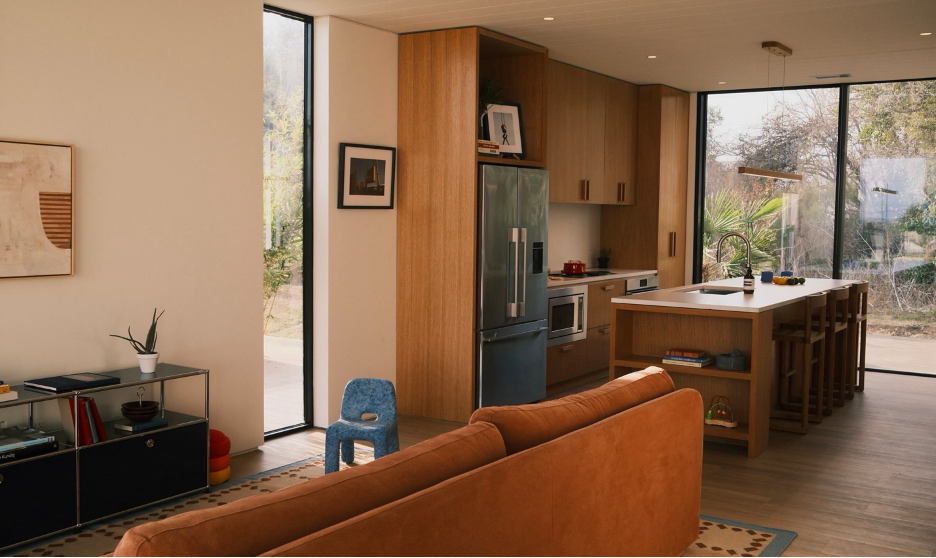
The whole system is purpose-built to attack those three non-zoning structural problems that have made homebuilding so stubbornly inefficient: customization, coordination, and time. The kit-of-parts approach introduces standardization without sacrificing the adaptability needed for varied urban lots. Because so much of the work happens in a factory rather than on the job site, the subcontractor coordination challenge shrinks dramatically. Assembly that once took months now takes days. What you get is something really cool: the 21st century American Starter Home. It’s a modern, affordable, family-sized home in the cities where young people already live and want to stay.
Local governments can help AHC, and any other firm that wants to do something similar, by streamlining permitting for infill housing that conforms to local zoning, and making it by-right. Building codes are another area for potential reform. Greater code harmonization, particularly with federal model codes around innovative construction methods, would make it easier for companies like AHC to operate across multiple markets without reinventing the wheel in every jurisdiction. None of this requires massive new spending. It’s about getting out of the way and letting builders build. Regulatory reform from the public sector unleashing innovation from the private sector is how we achieve progress and how we bring costs down.
Our Turn
The abundance agenda has always been about recognizing that scarcity isn’t inevitable, that the right combination of policy reform and private sector ingenuity can make the things people need more available and more affordable. Zoning reformers are doing their part by reopening the legal space for missing-middle housing. Now companies like AHC are doing their part by bringing the kind of engineering skill and manufacturing ambition that this country has always been good at to the hardest affordability problem we face. As AHC puts it, “The American Dream is built, not inherited.” That’s exactly right. Our forebears have done us enormous services. From Hamilton to Gettysburg to the Wright Brothers, they planted flags, they dreamed, and they built. But it is not enough to simply skate by on the achievements of previous generations. If we want America’s best days to be in front of us not behind us, we have to work to make that happen. To borrow a line from AHC, it’s our turn to build.
-GW