

One City Streamlined. The Other Stalled.
San Diego’s Housing Boom vs Los Angeles’ Post-Fire Bust

San Diego is showing what pro-housing policy actually looks like in practice. The city just released its 2025 Annual Report on Homes, and the numbers tell an incredible story: 8,782 new homes permitted in 2024, continuing a two-year surge that’s averaged 9,200 permits annually, a 40% jump from the early 2020s.
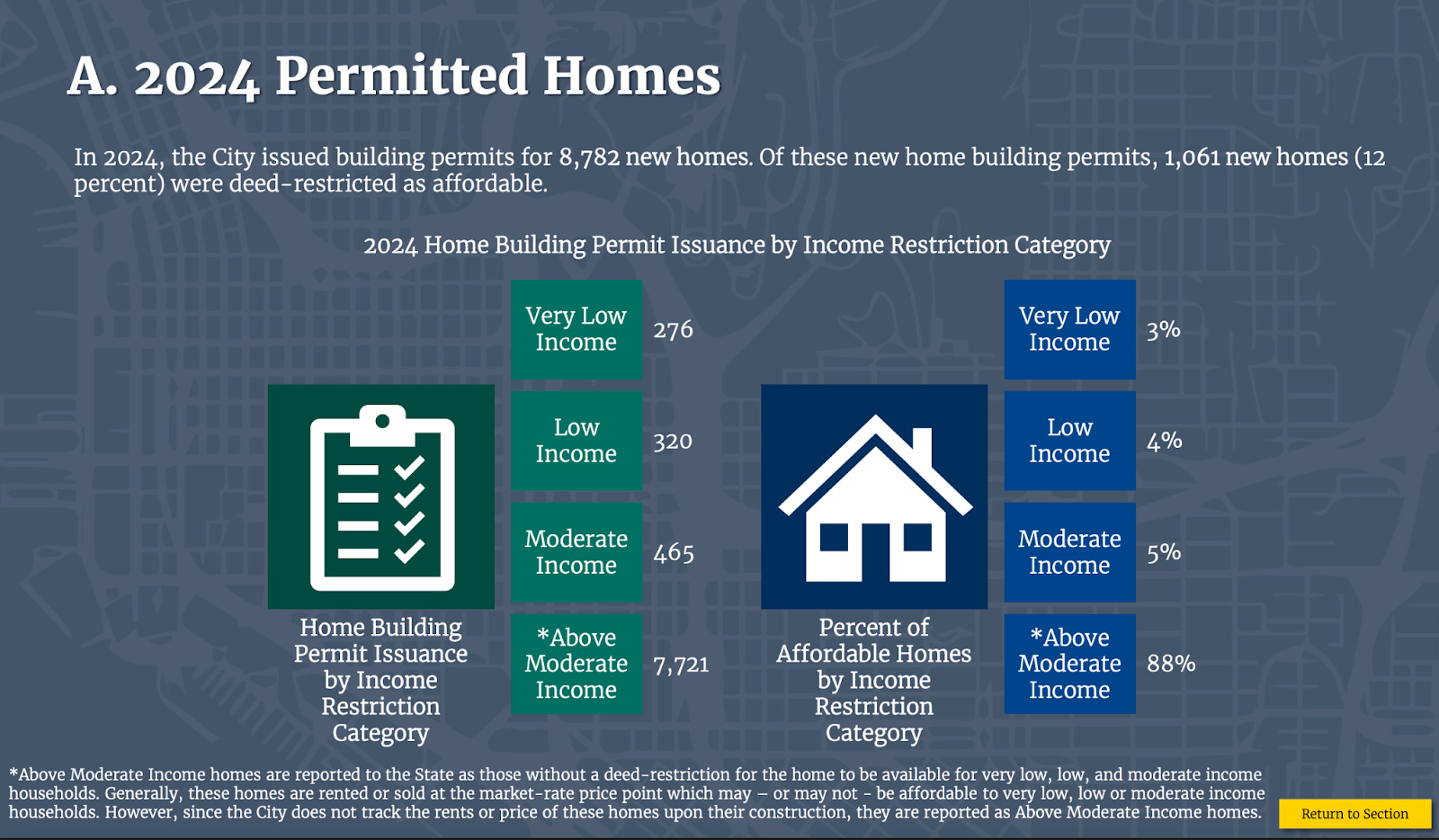
Image Credit: 2025 Annual Report on Homes
This isn’t happening by accident. San Diego has paired ambitious zoning reform with genuine process reform. Programs like Complete Communities – which creates incentives to build more homes near transit and enhanced density bonuses delivered over 4,500 units last year alone, with 16% designated as income-restricted affordable housing. The city also permitted more than 2,285 ADUs, a housing type that’s proven critical for adding gentle density and creating affordable options for families. On top of that, 12% were deed-restricted as affordable, allowing more market-rate housing to also be brought up with more applicants available.
But here’s what really matters: speed. Mayor Gloria’s executive order to expedite affordable housing means one in six homes permitted over the past two years were approved in 8 business days or less. When cities actually want housing built, they can cut the bureaucratic timeline from years to days.
The geographic pattern is equally important, 97% of income-restricted affordable homes and 85% of all units are going up in transit-accessible areas. This is how you solve housing and climate goals simultaneously, rather than treating them as competing priorities. It is also how you help people with the cost-of-living in two ways at the same time: housing supply lowers rent and the transit access reduces the need for a second, or possibly even first, car.
Over 31,000 homes permitted since 2021 represents a fundamental shift from decades of underbuilding. San Diego is demonstrating that housing abundance isn’t just about good intentions, it requires specific policy tools, streamlined permitting, and political leadership willing to prioritize results over process. Other cities facing affordability crises should be taking notes.
Image Credit: KPBS
Rebuild and Repeat
Yet, in a harsh contrast, Los Angeles has struggled to regain momentum in housing construction – even after a disaster that destroyed thousands of homes. In January 2025, a series of wildfires swept through Los Angeles County (including Pacific Palisades and Altadena), “exacerbated by severe Santa Ana winds”, and obliterated nearly 16,000 homes. In the immediate aftermath, state and local leaders vowed to “turbocharge the rebuilding effort”, recognizing that permitting and construction in California are infamously slow and costly. As a resident of Los Angeles who has witnessed friends lose their homes, I was quite vocal during this time. My hope was that we would see this moment of despair as a catalyst for change—so that when another wildfire breaks out, we won’t face such devastating losses again:
“But while America may shine brightest in moments of crisis, this pattern of waiting for disasters to force needed reforms extracts an enormous human and economic toll. We shouldn’t need thousands of destroyed homes and displaced families to recognize and fix dysfunctional systems. The fact that it takes tragedy to do what is needed is itself a tragedy.”
One year later, the results have been mixed. On one hand, Los Angeles did implement emergency measures to speed up “like-for-like” reconstruction of burned homes. Governor Gavin Newsom and Mayor Karen Bass issued orders in early 2025 to fast-track permits for homeowners rebuilding the same size and design house they lost, cutting approval times dramatically. Though capping the lot size at 110%, (essentially stopping any new rebuilds cannot be 10% larger than the original size) restricted what types of homes could be rebuilt. These steps, along with temporary waivers of some building codes, have put Los Angeles’ wildfire rebuilding on a relatively “speedy” track by historical disaster standards. As of this month, more than 2,600 residential rebuilding permits have been issued in the burn areas – roughly 20% of the homes lost – with another 3,300 permits in review. Governor Newsom hailed these permitting figures as “historic,” noting local agencies issued post-fire housing permits “three times faster” than their pre-fire pace. But 20% of homes rebuilt in one year that were all like-for-like rebuilds sounds more like a formality than historic.
Yet despite this emergency progress, Los Angeles has made little headway in broader housing development. For displaced families, the rebuild process has still been grueling and slow – most fire victims remain far from returning home. And beyond replacing what was lost, the city has not seized the moment to build more housing to address its chronic shortage. In fact, L.A.’s overall housing production slowed even as San Diego’s sped up. Los Angeles permitted just over 17,200 new housing units in 2024, down from 18,600 the year before and well below its state-mandated targets. That figure represents only about 30% of the annual volume needed for L.A. to meet its 2029 housing goal. In other words, L.A. continues to fall woefully short of its housing needs. The post-fire period could have been a turning point – a chance to cut through institutional hurdles and accelerate new construction citywide – but so far that opportunity has been squandered .
The City of ̶N̶I̶M̶B̶Y̶S̶ Angels
Why has Los Angeles lagged in a moment that demanded action? A major factor is the city’s entrenched NIMBY (Not In My Backyard) resistance and bureaucratic inertia, which together have stymied significant policy changes. Even as thousands of Angelenos lost their homes, powerful voices in L.A., (Spencer Pratt, who recently stated their run for Mayor of L.A., was a vocal critic)remained reluctant to loosen zoning or streamline development if it meant ceding local control. This was vividly illustrated in the fight over California Senate Bill 79 (SB 79) – a state-level housing streamlining bill passed in 2025. SB 79 allows statewide statewide zoning standards that make it faster and easier to build multi-family housing within walking distance of major transit stops. In essence, the law overrides certain local zoning restrictions and NIMBY objections in order to expedite housing production, particularly affordable apartments near transit. Governor Newsom championed SB 79 as a bold “Yes, in my backyard” measure to address the housing crisis statewide.
Los Angeles’ leadership, however, fiercely opposed the bill. In a rare open break with the Governor, Mayor Karen Bass and the L.A. City Council lobbied against SB 79. Bass urged Newsom to veto the bill and joined an 8–5 City Council vote formally condemning it. She argued that even though accelerating housing is important, SB 79 would “erode local control, diminish community input on planning and zoning, and disproportionately impact low-resource neighborhoods”. Several of the opposing council members believe that it would kill any neighborhood character their cities may have. Picking vibes over literal much-needed shelter. This rhetoric – defending single-family zoning and lengthy community review as essential — is classic NIMBY resistance. In the end, their lobbying failed to stop SB 79, Governor Newsom signed it in October 2025 – but the episode revealed Los Angeles’ reluctance to embrace sweeping pro-housing reforms.The city is even exploring legal action to block SB 79’s implementation within its borders, trying to carve out exemptions that preserve the very “local planning” prerogatives that have long stifled housing growth. The resistance runs so deep that even LA Metro’s Board of Directors voted in January 2026 to formally oppose local implementation of the law, with their staff report calling for “exempting Los Angeles County from SB 79” entirely, which I can speak for many housing advocates when I say this, is completely appalling. Even after SB 79 became law, LA’s institutional resistance persists.One even begins to ask: what is in the water here that leads so many of our powerful elected leaders to prioritize parking spaces and “neighborhood character” over the well-being and future of those who hope to own a home in this county one day, or, at the very least, to afford its staggering rents?
Will We Ever Learn?
San Diego and Los Angeles offer a vast contrast in housing progress. San Diego’s leadership embraced the housing crisis as an urgent mandate for change – boosting production with data-driven planning, incentives, and streamlined approvals. That city is now seeing tangible results in new homes built and permitted at record pace. Los Angeles, on the other hand, treated its housing crisis (even when compounded by a disaster) as something to be managed within existing structures. NIMBY resistance and a clinging to “local control” led L.A. to resist outside interventions like SB 79, and to shy away from reforms that might upset entrenched interests. The city’s own processes, from planning department fees to appeal protocols — it only costs $229 to file a complaint as an “aggrieved person” to block housing, but is in the $20,000’s to file paperwork to obtain permits — continue to frustrate and delay development.
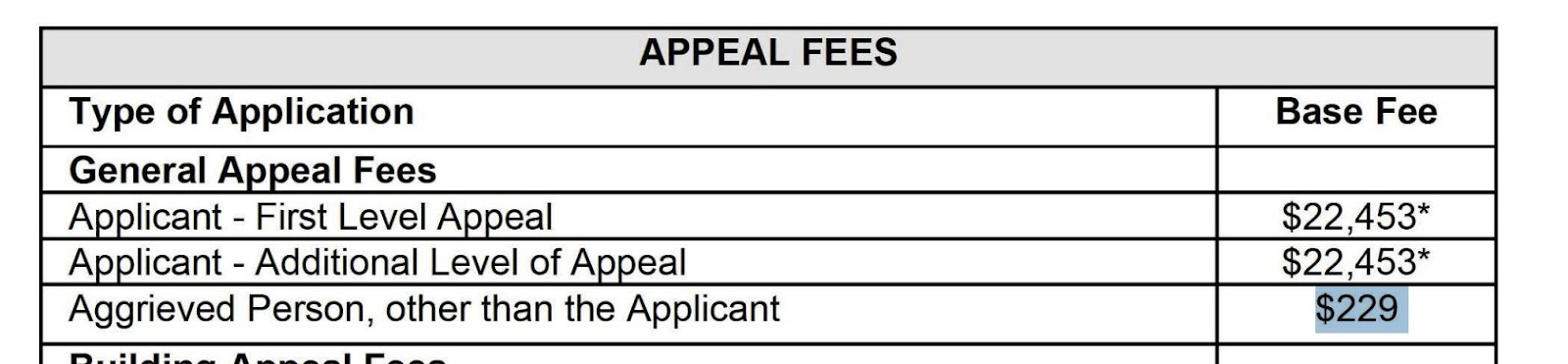
Image Credit: X
A year after the fires, Los Angeles could have been forging a bold new path on housing; instead, it is largely rebuilding what was there and inching toward its ambitious housing goals at a plodding rate.
I looked it up to compare, and San Diego in 2024 permitted the same number of units as the entire bay area did. San Francisco, San Jose, and Oakland need to step it up!
SD best city in the country!! If they can embrace yimby than any place in CA should be able to as well.