

Everyone Gets to Dream, No One Gets Left Behind
Senator Gallego Delivers a Real Housing Agenda

In December, Senator Ruben Gallego released a strong, detailed energy plan based around promoting affordability, accelerating the development of emerging technology, improving reliability, and building out America’s energy infrastructure. I reviewed that plan here. It’s worth a read.
Barely a month later, he has released another strong, detailed policy plan, this time on housing. You can read it here. In an age of politicians long on bluster and short on focus, it’s nice to see a leader doing the homework. A lot of people will treat these two plans as separate policy documents, but I think that’s a mistake. These two, taken together, are about what ails our economy writ large. In short, they’re saying “this is our economy on scarcity politics, it isn’t working for most people, and here’s how we fix it.” Conceptually, the housing plan has five main elements that I think are worth diving into.
1. Prices are Too High Because We Don’t Build Enough
2. We Don’t Build Enough Because We Have Too Much Red Tape
3. Everyone Gets to Dream: First-Time Homebuyer Assistance is Crucial
4. Nobody Gets Left Behind: The Safety Net Matters
5. We Aren’t Ready for the Future, But We Can Be If We Choose To
Prices are Too High Because We Don’t Build Enough
The median home now costs $412,500 (link report here and elsewhere below), which is five times the median household income. The ratio used to be three to one. The typical first-time homebuyer is 40 years old, up from 31 just a decade ago. First-time homebuyers used to comprise 40 percent of the market. Now they’re just 21 percent of it. To afford a median-priced home, you need $26,800 for a down payment; only 12 percent of renters have that kind of money saved. People feel frozen out of the housing.....because they are frozen out of the housing market. They have every right to be frustrated with the status quo.
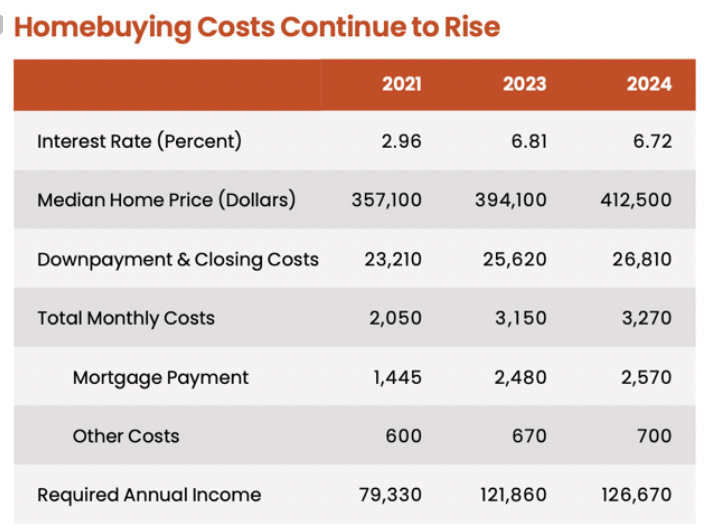
Some of the statistics around housing scarcity that Senator Gallego presents are genuinely nauseating. A record 22.6 million renter households are cost-burdened, meaning they spend more than a third of their income on housing. The housing shortage drains nearly $2 trillion per year in lost productivity and wages. An additional one million young adults are living with their parents compared to pre-pandemic trends. 99 percent of Americans live in counties where housing costs rose faster than incomes between 2000 and 2020. These are not numbers for numbers’ sake. Instead, they represent an abject failure to deliver on the promise of the American Dream. When that dream starts to look like, at best, a myth, if not an outright lie, it is little wonder we live in a zeitgeist dominated by cynicism, anger, and declining social trust. Senator Gallego, more than anyone in DC I’ve seen, gets this. There’s a reason the subtitle of the report is “Rebuilding the American Dream and Restoring Housing Affordability.” Housing isn’t just housing in this country, as important as that is. It’s the cornerstone of the Dream.
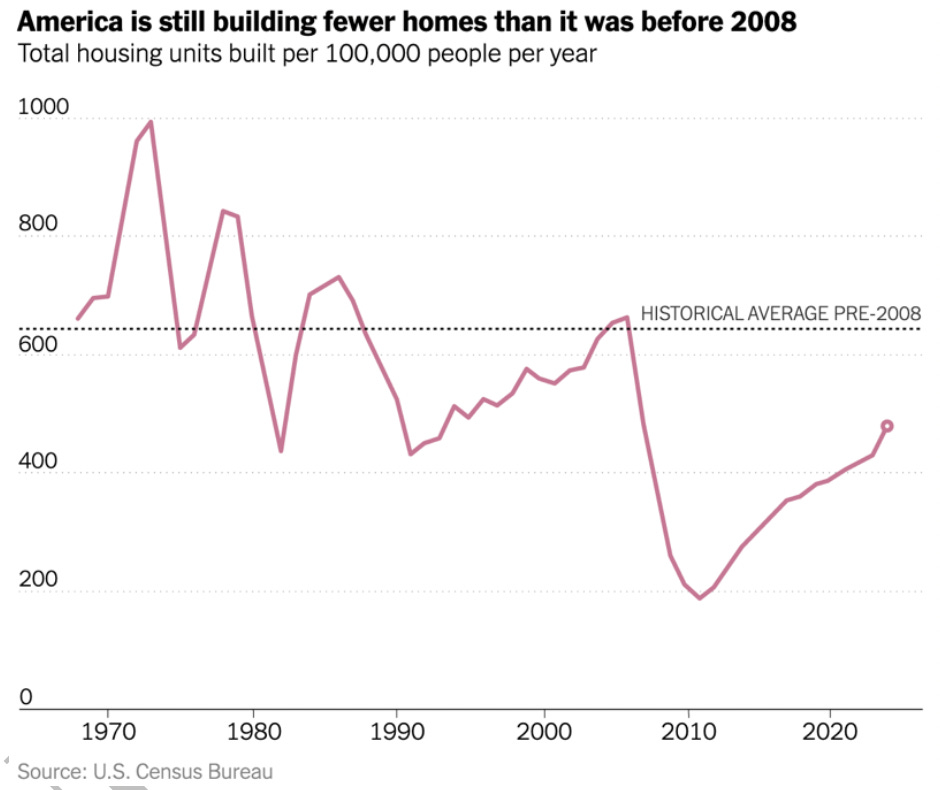
If the U.S. housing stock had expanded from 2000 to 2020 at the same rate it did from 1980 to 2000, we’d have 15 million more housing units right now. Fifteen million. Instead, we’re building 400,000 to 500,000 units per year when we need at least 600,000 just to keep pace with population growth and household formation. We’re not treading water; we’re sinking beneath the weight of our own anti-building policy choices.
We Don’t Build Enough Because We Have Too Much Red Tape
Here’s where the plan gets into some really smart policy ideas. It starts by building on the reforms that are already in the “Road to Housing Act” and its House companion the “Housing for the 21st Century Act” which can, hopefully this year, turn into the most substantial federal housing bill in decades. It would eliminate the chassis rule that stymies the production of small manufactured homes, responsibly open up some underutilized federal land and federal properties, facilitate office-to-residential conversion, make it easier to build accessory dwelling units (ADUs), and accelerate innovation in new construction techniques.
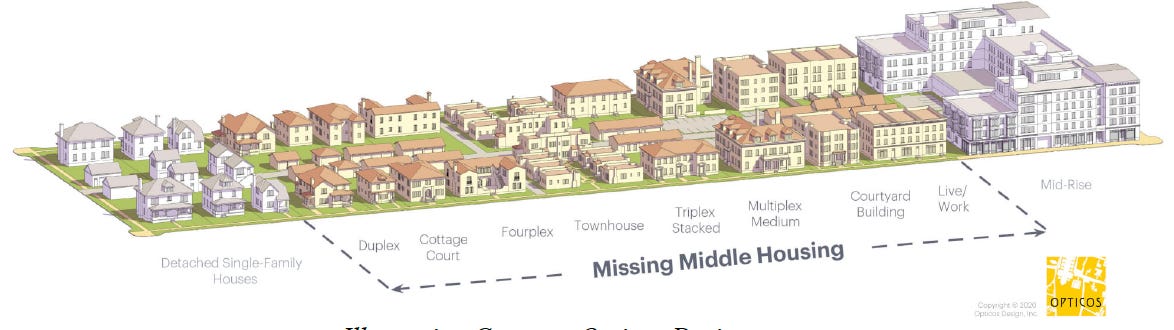
Those are all great, but here’s where it gets really ambitious; classically American, ‘we are a country of doers and builders’ kind of ambition: Gallego’s plan takes the state and local challenge head-on. It is no secret to anyone who studies housing policy that most of the obstruction takes place at the state and local level. It is because of those state and local impediments that we are so short of what’s called “missing middle housing.”
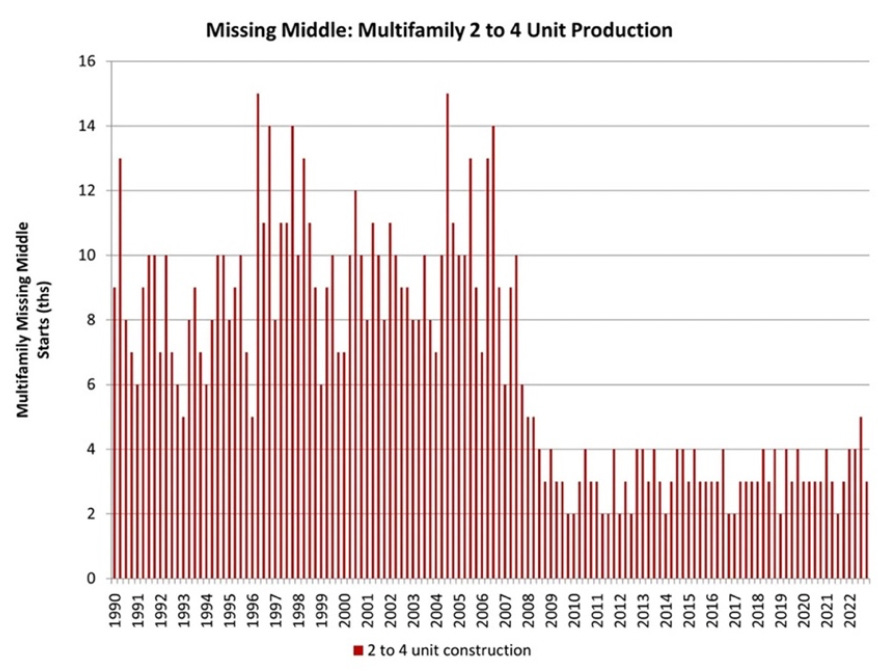
But, up to this point, no one’s had the stomach for a fight over that, so that set of impediments to the American Dream went unchallenged. Not anymore. As Gallego argues “the federal government cannot directly rewrite local zoning codes or streamline municipal permitting processes, but it can create powerful incentives for reform, provide resources to support modernization efforts, and most importantly, fix its own broken processes first.”
The boldest idea here is to create a federal rebate for all households in “pro-housing” jurisdictions. Essentially, the government would set ambitious housing-development targets and if you live in a place that hits those targets, you get a tax rebate. This guarantees that residents in those places directly benefit from housing production and gives residents a clear, direct incentive to support more housing production. Partnered with this, the plan would create a competitive grant that these “pro-housing” places -and only those places- would be eligible for. It would do something similar with Department of Transportation grants too. To help states and localities update their zoning, it would get HUD to publish best practices for zoning reform, and it would make the Community Block Grant Development (CDBG) and the HOME program easier to use. Finally, it would remove red tape that gets in the way of Native American communities’ housing development needs.
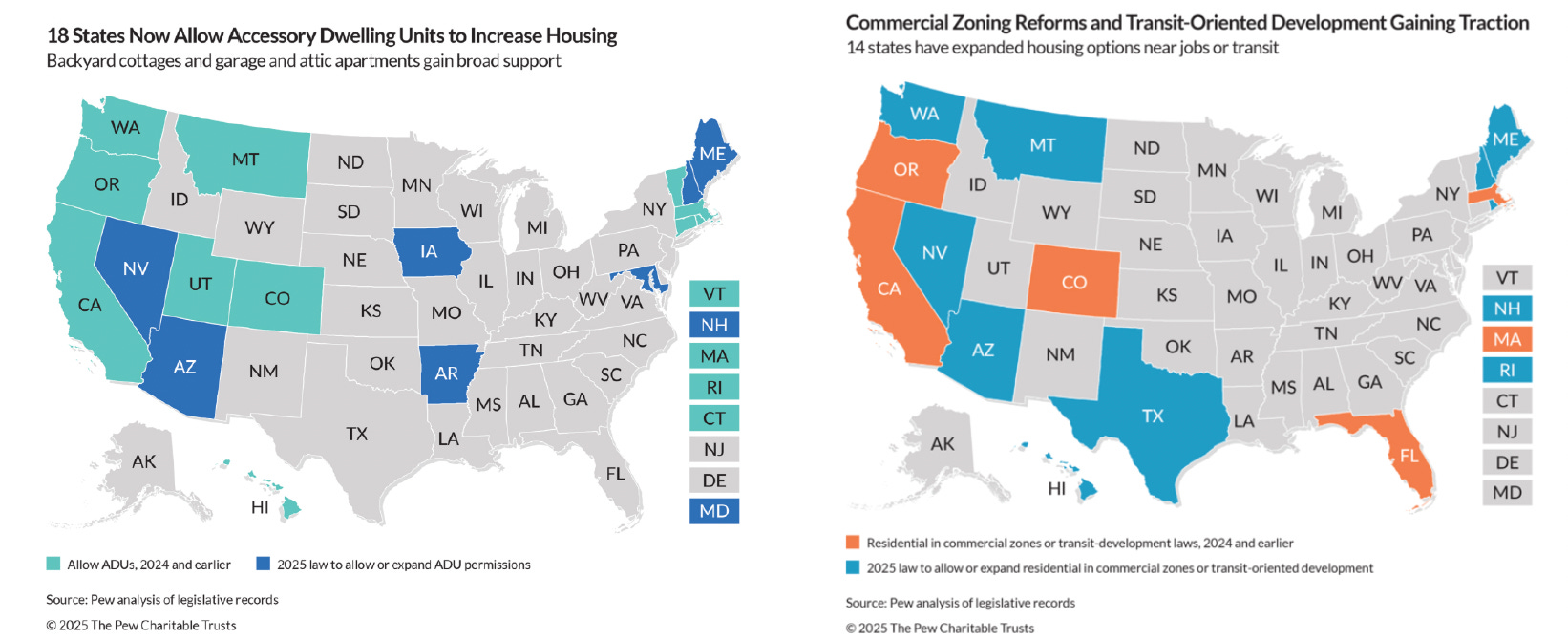
This is good. We want to reward places for improving their housing policies. A number of states are, for example, making it easier to build ADUs and allowing more residential-in-commercial, which asI’ve discussed previously, is how you actually make mixed-use zoning work. These are positive developments and it makes complete sense for the federal government to incentivize more of this.
And there’s some stick to go with all that carrot. As the report argues “communities that persistently obstruct housing development despite clear regional needs may face accountability measures, such as reduced federal support or requirements to develop concrete plans for increasing supply.”
As Gallego notes, it is a lot easier to ask states and localities to do this if the federal government gets its own regulatory house in order first. To that end, Gallego’s plan would streamline NEPA reviews, create more NEPA exemptions for infill development, and make reforms to HUD and USDA jurisdiction that would expedite environmental reviews and rural development projects that are under their purview.
Everyone Gets to Dream: First-Time Homebuyer Assistance is Crucial
The housing shortage is a supply problem, and we need to build our way out of it. But there is also the problem of down payments. When potential first-time homebuyers are forced to spend an arm and a leg every month on rent, it becomes very difficult to scrape together the down payment. Trust me on this one- my wife and I saved for many years to get ours together. We were not and are not alone. There are a lot of potential first-time homebuyers who could make the monthly mortgage payment and who crave being part of the American Dream, but can’t get over that financing hurdle. And it isn’t because they buy too much avocado toast or can’t financially get their act together. We have a system that requires either generational wealth or waiting until you’re 40 years old to achieve what used to be a milestone of your late twenties. It’s not working for most people.
It’s more than an economic problem; it’s a psychological one. It’s a betrayal of the basic promise that if you work hard and play by the rules, you can build wealth and security for yourself and your family. Homeownership has been the primary wealth-building tool for working-class Americans for generations. When we make it functionally impossible for people to access that tool, we’re not just making life harder for individuals, we’re undermining the entire structure of upward mobility.
Gallego’s plan tackles this head-on. It would establish a pilot program to test lowering Federal Housing Administration down payment requirements from 3.5 percent to zero or one percent for creditworthy first-time buyers with reliable rent payment history. It would create a new FHA loan program for teachers and first responders that eliminates down payments entirely. It would establish a refundable tax credit worth up to $15,000 for first-time homebuyers and modernize the IRA withdrawal limit from $10,000 to $50,000 for home purchases.
These aren’t handouts or waste or fraud. They’re investments in ensuring the American Dream remains accessible. The American Dream cannot be allowed to become a myth or a broken promise. Everyone has to be able to dream. First-time homebuyer assistance is a big part of that.
Nobody Gets Left Behind: The Safety Net Matters
Building more housing and helping first-time buyers addresses the long-term crisis. But what about people who are struggling right now? What about families one missed paycheck away from eviction, or veterans sleeping on the street, or disabled individuals who can’t navigate the bureaucratic maze to access the benefits they’re entitled to? They deserve stable housing too.
Markets are the best long-term solution to building more, but even market enthusiasts like myself will tell you that there are such things as market failures. The market is sometimes not great at providing for poor people in desperate need of help right now. That’s what the social safety net is for. And the Trump administration is gutting it. Senator Gallego’s plan would restore and strengthen it. Simple as.
It would expand rental assistance in fast-growing cities where voucher supply hasn’t kept pace with population growth. It would increase funding to help voucher holders actually find landlords willing to accept them, because a voucher is worthless if 40 percent of holders can’t find an eligible unit. It would restore the SOAR program that helps disabled and homeless people access disability benefits, which the Trump administration cut. It would expand housing support for homeless veterans. It would reverse Trump’s disastrous changes to homelessness programs.
Nobody gets left behind means nobody gets left behind. It’s a Marine Corps principle, and it should be American housing policy too.
We Aren’t Ready for the Future, But We Can Be If We Choose To
Half of America’s homes were built before 1980. Yes, that is how SLOW we are building housing. Those older houses often have inadequate insulation, outdated systems, and usually weren’t designed for the climate reality we’re living in now. Meanwhile, 450,000 affordable housing units sit in flood zones, home insurance premiums have jumped 30 percent or more in a third of zip codes, and homeowners spent $23 billion annually repairing disaster damage in 2021-2023, up from $9 billion in 2003. We had 27 billion-dollar disasters in 2024 alone, totaling $182 billion in damage.
This set of problems often goes under-discussed but it’s making housing less affordable and less stable for millions of families. You can’t get a mortgage without insurance, and insurance is becoming either unaffordable or unavailable in growing parts of the country. Gallego’s plan has responses to this too.
It would reverse Trump’s cuts to NOAA climate research: i.e. the data we need to understand developing risks. It would restore funding for disaster mitigation programs and the Weatherization Assistance Program, which helps families improve energy efficiency and weather resilience (I talked about this a few weeks ago in relation to heating abundance). It would provide grants for water infrastructure upgrades to handle severe weather. It would require federal studies on wildfire impacts on home insurance markets. And it would require that federally-funded projects be located outside flood hazard zones, a common-sense standard the Trump administration bizarrely reversed.
The plan also tackles a less obvious but crucial problem: reforming the appraiser profession to address bias and workforce shortages that slow down home purchases and perpetuate discrimination. It’s one of those details no one thinks about, but it’s important, and it’s telling of Team Gallego’s thoroughness that it’s in here. Last, to help ensure that we have the construction necessary to build more housing, it supports funding for a Department of Labor program that would help expand apprenticeships in housing construction.
Are We Going to Fight For This, or What?
Senator Gallego’s housing plan, read alongside his energy plan, lays out what’s broken in the American political economy and what fixing it requires. We’ve spent decades making it harder to build things, we have too much red tape and a threadbare safety net that leaves people behind, and now we’re paying the price in unaffordable housing, underwhelming infrastructure, and diminished opportunity. This is our economy on scarcity politics.
The path forward isn’t complicated: build more, cut red tape, help people access homeownership, strengthen the safety net, and prepare for the future. But it does require summoning the political will to actually do it. Gallego’s laid out the roadmap. The question is whether anyone else in Washington has the stomach for the fight that following it demands. Whether the American Dream, in the 21st century, is a visceral reality or a faded myth may depend on the answer.
-GW
Outside the box thinking is required to address the housing affordability crisis especially for Gen Z and millennial. Both of these cohorts are responsible for family formation which is vital for societal stability. Dems need to hang out the "Big memetic ideas wanted" sign and find new ways to approach this issue. Here's mine:
https://open.substack.com/pub/priceofbeans/p/redistributing-opportunity-why-democrats?r=9x3dh&utm_campaign=post&utm_medium=web
Yeah, saving up for a down payment is hard. But on the flip side 3.5% is already REALLY low.
My wife and I moved in with my parents for 2+ years (after already being married and living in an apartment for several years). You do what you have to to get ahead.
Or you can share a place with someone else.
I had a friend with a house with multiple adults all sharing rooms with bunkbeds.
I had another were 4 families shared the same house paid off that one, then bought another and another and another until all 4 families had a home THEN they finally all moved into their own home.
Again, you do what you need to, to get ahead.